4K Gambling: The Demand for High-Fidelity Mobile Slots
For a decade, “Mobile Gambling” was synonymous with “Compromise.” To get a slot machine to run on a 3G network and an iPhone 5, developers had to compress the textures, remove the 3D animations, and simplify the sound effects. You were playing a “Lite” version of the real thing.
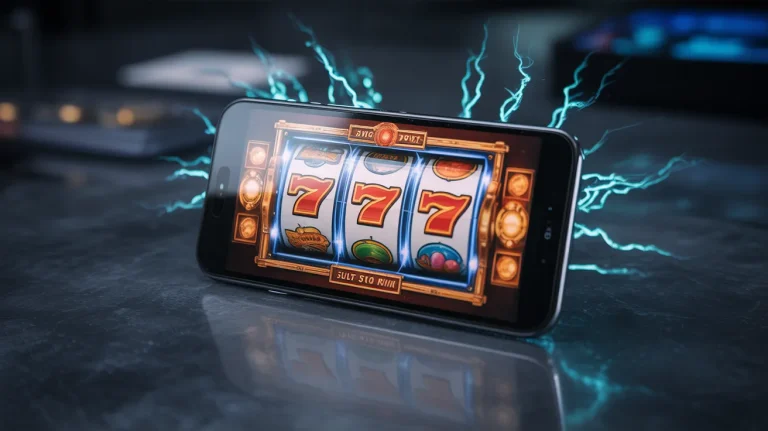
In 2026, that script has flipped. The smartphone in your pocket likely has a better screen than the monitor on your desk. With the prevalence of 120Hz OLED displays and 5G bandwidth, players are no longer accepting compressed graphics. They demand “Retina-Ready” gambling. They want 4K textures, particle effects, and ray-traced lighting on their 6-inch screens.
This shift towards high-fidelity mobile gaming isn’t just aesthetic; it’s psychological. In the casino world, “Pixelation” equals “Cheap,” and “Crispness” equals “Trust.”
The Death of “Mobile Lite”
The modern player notices details. When a slot symbol spins, they expect to see the reflection of light on the gold coin. When a card flips in Blackjack, they expect to see the texture of the felt table.
If a casino serves a low-resolution asset to save bandwidth, the illusion breaks. The game feels rigged or “budget.”
Premium operators have realized that modern mobile GPUs (like the A19 Pro or Snapdragon 8 Gen 5) can handle desktop-class assets. They are stopping the practice of serving “mobile optimized” (read: blurry) assets and are instead streaming full 4K textures to mobile devices.
National Casino: The “Dark Mode” Aesthetic
The best example of this design philosophy is National Casino. While many competitors still use cluttered, white backgrounds that look like Excel spreadsheets, National Casino has embraced a “Luxury Dark Mode” aesthetic.
This is a strategic choice for the OLED era. On a modern flagship phone, “Black” is not just a dark grey; it is a turned-off pixel. It is infinite contrast.
A review of the National Casino mobile betting page design shows a UI built specifically to pop on these high-end screens. The gold accents against the true-black background create a sense of depth and premium weight. The icons are vector-based (SVG), meaning they remain razor-sharp whether you are on a mini-tablet or a massive foldable phone.
120Hz: The New Standard for “Spin Feel”
It isn’t just resolution; it’s refresh rate.
Old mobile casinos ran at 30 or 60 frames per second (FPS). This made the spinning reels look blurry or stuttery.
Modern “High-Fidelity” casinos unlock the framerate to match the device—often 120Hz.
When you press “Spin” at 120Hz, the motion is fluid. The reel stop feels “heavy” and instantaneous. This reduces the cognitive load on the player and makes the session feel more responsive. It bridges the gap between a video game and a mechanical device.
The Bandwidth Trade-off
The only downside to this 4K revolution is data usage. A high-fidelity session can burn through gigabytes of data if the assets aren’t cached properly.
However, with 5G and WiFi 7 becoming standard, the bottleneck is disappearing. Players are voting with their thumbs: they are willing to spend the data to get the premium experience. They would rather wait 2 seconds for a beautiful game to load than play an ugly game instantly.
Conclusion: Pixels Pay
In the war for attention, beauty matters.
If you are still playing on a site that looks like it was built in 2015, you are missing out on the immersion that modern hardware allows.
Look for casinos that market themselves as “HD” or “High-Fidelity.” Look for interfaces that respect your $1,000 phone’s capabilities. If the casino looks expensive, you feel like a high roller. If it looks cheap, you feel like a mark.